List of Simple Chemicals
Table of Contents
- 1. Hydride
- 2. Hydronium
- 3. Aliphatic Compound
- 4. Alkane
- 5. Alkene
- 6. Alkyne
- 7. Alcohol
- 8. Aldehyde
- 9. Acyl Group
- 10. Carbonyl Group
- 11. Ketone
- 12. Ketene
- 13. Carboxylic Acid
- 14. Ether
- 15. Cyclic Ether
- 16. Ester
- 17. Lactone
- 18. Furan
- 19. Pyran
- 20. Oxonium
- 21. Alkaloid
- 22. Amine
- 23. Imine
- 24. Azanide (IUPAC)
- 25. Azo Compound
- 26. Nitro Group
- 27. Nitroso Group
- 28. Nitrate
- 29. Pyridine
- 30. Pyrimidine
- 31. Pyrrole
- 32. Amide
- 33. Lactam
- 34. Maleimide
- 35. Azide
- 36. Hydrazine
- 37. Sulfonyl Group
- 38. Sulfonic Acid
- 39. Sulfonate
- 40. Sulfate
- 41. Sulfide
- 42. Thiol
- 43. Halide
- 44. Hydrogen Fluoride
- 45. Aromatic Compound
- 46. Aryl Group
- 47. Phenol
- 48. Anisole
- 49. Anethole
- 50. Salicylic Acid
- 51. Phthalic Acid
- 52. Phthalic Anhydride
- 53. Phthalimide
- 54. Silane
- 55. Silicide
- 56. References
1. Hydride
\[ \ce{H-} \]
Ion, or negatively charged within compound.
2. Hydronium
\[ \ce{H_3O+} \]
Ion, or positively charged within compound.
3. Aliphatic Compound
Organic compound that does not contain aromatic ring.
4. Alkane
Acyclic saturated hydrocarbon
4.1. Alkyl Group
\[ \ce{CH_3(CH_2)_n -} \]
5. Alkene

Hydrocarbon containing a carbon-carbon double bond, also called olefin.
5.1. Alkenyl Group
5.2. Ethylene
\[ \ce{C_2H_4} \]
- Ethene (Systemic)
6. Alkyne

Hydrocarbon containing a carbon-carbon double bond, also called olefin.
6.1. Alkynyl Group
6.2. Acetylene
- Ethyne (IUPAC)
- Ethyne (IUPAC)

7. Alcohol

8. Aldehyde

8.1. Acrolein
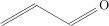
- Propenal
9. Acyl Group

10. Carbonyl Group

11. Ketone

Aliphatic compound containing carbonyl group in the middle.
11.1. Acetone

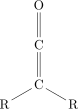
12. Ketene
13. Carboxylic Acid

14. Ether

14.1. Alkoxy Group

15. Cyclic Ether
15.1. Oxirane
- Epoxide (Common)

15.2. Oxetane

15.3. Oxolane
- Tetrahydrofuran (THF)

15.4. Oxane
- Tetrahydropyran (THP)

16. Ester
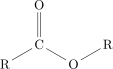
Ester is a compound derived from an acid with the hydrogen in the hydroxyl group replaced by an organiyl group.
The stereotypical example is carboxylic ester (R−C(=O)−O−R'), often simply called 'ester'. It can be formed by substitution reaction between carboxylic acid (R−C(=O)−OH) and an alcohol (R'−OH)
The double bond between central atom and oxygen are necessary for the esterification to occur, except for extreme conditions. A double bond polarizes the molecule and lessens the activation energy by absorbing negative charge in the transition state.
17. Lactone
Cyclic ester
18. Furan

19. Pyran
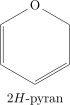
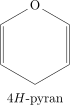
The numbering is based on the location of saturated carbon.
20. Oxonium
\[ \ce{O+} \]
Ion, or positively charged within compound.
21. Alkaloid
From alkali, and -oid "like"
Any organic compund that contains nitrogen.
22. Amine

Organic compounds that contain C-N bounds.
Classified according to the number of substituents
- Primary (1°): R-NH₂
- Secondary (2°): R-NH-R
- Tertiary (3°): R-N(-R)-R
- Cyclic Amines: Part of cycle
23. Imine

24. Azanide (IUPAC)
- Amide (Common)
\[ \ce{NH_2-} \]
Ion, or negatively charged within compound.
25. Azo Compound
- Azene

26. Nitro Group

27. Nitroso Group

28. Nitrate
\[ \ce{NO_3-} \]
28.1. Niter
\[ \ce{KNO_3} \]
- Nitre
- Potassium nitrate mineral
29. Pyridine

30. Pyrimidine

31. Pyrrole

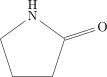
31.1. 2-Pyrrolidone
31.2. Polyvinylpyrrolidone
- PVP, Povidone (commonly)
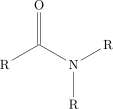
32. Amide
32.1. Formamide

33. Lactam
Cyclic amide
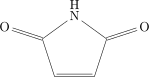
34. Maleimide
35. Azide

36. Hydrazine
\[ \ce{N_2H_4} \]
37. Sulfonyl Group

37.1. Sulfuryl Group
In inorganic chemistry, the names changes to sulfuryl group, when both substituents are not organic group,
38. Sulfonic Acid

39. Sulfonate
Salt (MRSO₂O), anion (RSO₂O⁻), or ester (RSO₂OR') of a sulfonic acid (RSO₂OH).
40. Sulfate
\[ \ce{SO_4^2-} \]
41. Sulfide
\[ \ce{S^2-} \] Inorganic Anion or Compound containing it.
In organic chemistry, it referes to the linkage C-S-C, also called thioether.
42. Thiol

Organosulfur compound with thiol group (-SH), also called sulfhydryl group or sulfanyl gorup.
43. Halide

Ion, or negatively charged within compound.
The name comes from Greek ἅλς (hals) meaning salt.
44. Hydrogen Fluoride
\[ \ce{HF} \] Hydrogen Fluoride (gas) Hydrofluoric Acid (solution)
It is strong acid on high concentration, due to the high electron affinity of Flourin, but it is weak acid in dilute aqueous solution.
45. Aromatic Compound
Organic compound that contain aromatic ring.
46. Aryl Group

Any functional group or substituent derived from an aromatic ring.
The attachment must be strainght to the aromatic ring. Examples are
- phenyl group
- tollyl group
- xylyl group
- naphthyl group
47. Phenol
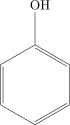
48. Anisole
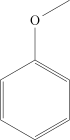
- Methoxybenzene
49. Anethole
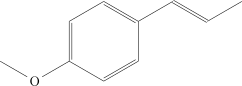
50. Salicylic Acid
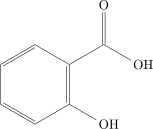
50.1. Acetylsalicylic Acid
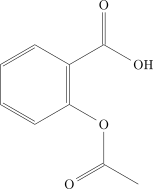
- ASA, Aspirin
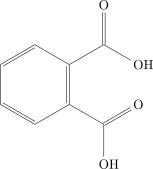
51. Phthalic Acid
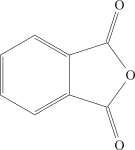
52. Phthalic Anhydride
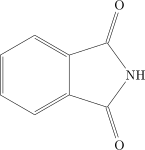
53. Phthalimide
54. Silane
- Silicane
\[ \ce{SiH_4} \]
They combust spontaneously when contacted with air.
Silicide compound and acid creates it.
55. Silicide
Silicon ion or compound with negatively charged silicon atom.